How precious are Your thoughts to me, O LORD ... how vast is the sum of them!

Tuesday, January 26, 2016

Book Review: Idylls of the King

Who hasn’t heard of King Arthur? Chances are you’ve probably even just read or watched something weaved from his lore. I just finished the book that’s arguably responsible for all of that—when Idylls of the King emerged in nineteenth-century England, it resurrected Arthurian intrigue, never to slacken again.

To start off my year in the right direction of one of my goals (that of reading more classics than I did in 2015), I began Alfred, Lord Tennyson’s great but relatively brief work on January 1. Idylls of the King is a compilation of narrative poems about King Arthur and his companions, based off Sir Thomas Malory’s seminal Le Morte d’Arthur of the fifteenth century. Tennyson published the first poems, “Enid,” “Vivien,” “Elaine,” and “Guinevere” in 1859, and seven more in the years following until the last one, “Balin and Balan,” came out in 1885.   


Lancelot and Elaine - Eleanor Fortescue-Brickdale
 
You may be like me and a bit confused about what “idyll” means:

literary piece about charming rural life: a short work in verse or prose, a painting, or a piece of music depicting simple pastoral or rural scenes and the life of country folk, often in an idealized way
(Encarta ® World English Dictionary © & (P) 1998-2005 Microsoft Corporation. All rights reserved.)

So there you are. These idylls certainly did paint life in an idealized, pastoral form: knights were mighty, ladies were beautiful, nature was splendid, so on and so forth. It was fun to read the Victorian sentimentality, not only about idealized beauty, but the melodrama and over-the-top tragic deaths. Well, obviously fun isn’t the right word…but I had to read with a touch of amusement or it’d be too depressing. As it was, I was surprised that so many of the stories were tragedies. Camelot was supposedly a magically wonderful place, but more was said about it crumbling than about the good things that happened there. Guinevere and Lancelot’s love affair was touched on in almost every poem, and you’ll discover its implications if you read to the end of the Idylls. Quite sad. Idylls really depicted human imperfection and the tragedies that result from it. Nevertheless, “Guinevere,” the poem where Arthur confronts his queen, was one of my favorites, because of its profound portrayal of forgiveness and repentance. But my other favorite was “Gareth and Lynette,” one of the rare happy stories, and certainly the most lighthearted.


Queen Guinevere's Maying - John Collier. Public Domain (Wikimedia Commons)

Here is a list of the idylls:
The Coming of Arthur
The Round Table:
   Gareth and Lynette
   The Marriage of Geraint
   Geraint and Enid  [formerly one poem called Enid]
   Balin and Balan
   Merlin and Vivien
   Lancelot and Elaine
   The Holy Grail
   Pelleas and Ettarre
   The Last Tournament
   Guinevere
The Passing of Arthur

I really enjoyed the Idylls. It had been on my to-read list for a while. Though it took me several pages to get into it, like most writing styles, I just had to get used to it—and then I loved it. The verses are beautiful. Poetry can give a writer an excuse to say things in a flowery, lyrical way, and no one minds because it’s poetry. The story and clarity are not as important as the shape of the lines. And while it may not be the most artistic or profound verse in existence, I was still often delighted by the new ways Tennyson’s writing phrased or imagined something:

“See here, my child, how fresh the colours look,
How fast they hold, like colors of a shell
That keeps the wear and polish of the wave.”
~*~
“And then
Stream’d thro’ my cell a cold and silver beam,
And down the long beam stole the Holy Grail,
Rose-red with beatings in it, as if alive,
Till all the white walls of my cell were dyed
With rosy colors leaping on the wall”

“The Passing of Arthur,” at the very end, had me reading almost all of it aloud to myself. I’m not typically a poetry person, but Idylls captured me tightly enough to pant over it like poetry enthusiasts pant over their favorite poems. 


"La Mort d'Arthur" - James Archer. Public Domain (Wikimedia Commons)

My favorite character was Arthur, but he was too busy respectably ruling Camelot to have adventures like his knights, so he didn’t show up a lot in most of the stories. But I did enjoy “The Passing of Arthur” quite a bit because we finally got an endearing, vulnerable description of him, a splendid, wounded lion quiet and still enough for us to study him.

Sometimes ambiguous endings are the most powerful. The question at the end of the end makes me tingle: Did King Arthur really die? Is he coming back? When his country needs him most, will he reappear?

Have you ever read The Idylls of the King? What is your favorite Arthur retelling?


Sunday, January 24, 2016

Life Now and Back Then

It’s funny, isn’t it—a lot of times when the most life is happening the least gets written down! Sorry for inexplicably neglecting my blog last week. Between all life’s activities, and my only computer time going to copy editing (I love copy editing!), it had to be omitted. For my birthday on January 20, I had fun things to do with friends on Tuesday and Wednesday.

And then I got sick. With a 72-hour stomach flu. Now, recovering from it (my memory will be scarred for a while yet), I have a renewed enthusiasm for life. And the thing I missed most was writing. I’d been away from it the longest, after all, doing plenty of everything before I got sick, except writing. I’m at the awkward place where a WIP’s first draft is done but not quite ready to be edited, so I’ve been an itinerant writer, never working on any one thing for a while and feeling dissatisfied because of it. I don’t like writing breaks.

Although I hate being sick, recovering from it is one of the best feelings! I thank God it wasn’t worse and didn’t last longer, and I’m thankful for the energy I now have. For all you who are or who have been sick this winter, my empathy extends to you!

And now, on to another part of my post. For some time now I’ve been dwelling on the Victorian age. It’s one of my favorite periods in which to immerse myself, so while it wasn’t wholly planned, one thing led to another, and here I am, submerged. I read Idylls of the King and am finishing up a selection of other Tennyson poems (Tennyson was England’s poet laureate from 1850 to his death in 1892); I’m reading Cranford (by one of my favorites, Victorian author Elizabeth Gaskell); recently listened to some Sherlock Holmes mysteries on Librivox; watched the most recent Sherlock (The Abominable Bride, set in the 1890s; I watched it while I was sick); and am watching the BBC miniseries Little Dorrit (set in the 1820s, but written by Charles Dickens in the 1850s. I love it!). 


wikimedia commons

All this makes me contemplate the era, of course. It reaffirms my sense that if I could ever apply myself to intensively study any one historical time and place, it would be 19th-century England. I would love to gain a better understanding of what it was really like back then, and trace how what they did then affects us now. Plus it’s just plain fascinating!

What have you been into lately? Have you dabbled in anything from the Victorian age recently?

Tuesday, January 12, 2016

A Blue and Purple Finger

Whew! We’re already almost two weeks into the new year. It feels fresh though, as if I’m still only on the first page or so of the book of 2016. Perhaps in part because I’m still reading the books I started on or before January 1—Idylls of the King and Pursuing Justice, respectively. Books are something I commonly use to measure the passage of time. I hope to post about each of these two once I’m finished with them.

It’s funny how something small can affect you so much. A week ago Monday I slammed a car door on my left index finger. If you’ve ever performed a feat like that before, you know how much a swollen and bruised finger protests afterward with everything you do. There’s a lovely dark purple-blue blood blister around and under the nail (the exact color of my lavender soap!). Being swollen, it still looks like it belongs to another hand besides mine, but at least I can type with it now, make a fist, and play the piano, things I couldn’t do the first week! Lavender oil helped quite a bit. For the most part, though, it’s learned to stay out of the way when my hands are busy.

This has given me a glimpse of how people can compensate with worse injuries—take one day at a time, one activity at a time, modify how you do something or don’t do it at all (like shadow punch instead of hit the punching bag full force in martial arts class). Plus, it’s just been interesting…I know what a smashed finger feels like now, so I can write about it in a story someday! (*Cue absurd grin.*)

But isn’t it funny how easy it is to focus on our own small problems, and forget about the troubles in the world at large? I can guarantee you that silly little finger bruise has taken up more room in my mind than a host of vastly more important issues. God convicted me of that, so that every time I was tempted to mourn my finger, I would pray for someone else going through something far worse. It helped that I was reading Pursuing Justice by Ken Wytsma and D. R. Jacobsen. Talk about a mind-blowing book! I’ll get into it when I write my review, but it’s making me think about the world in a (hopefully) not so selfish, narrow-focused way.

I pray your new year has been happy and healthy so far! Has God been showing you anything lately? Have you ever been laid up with an injury or bad sickness? How did you cope? (When I hurt my Achilles tendon last year, that was an ordeal that brought with it lots of lessons. I still live with repercussions today.)

Tuesday, January 5, 2016

Welcome to a New Year

It’s the first post of the year on Kelsey’s Notebook! That means I should have some resolutions or goals to share, right? Or at least something insightful to say in general about entering a new year and leaving the old one?

I won’t be very insightful, I’m afraid, but I’ll have a look back on some highlights of 2015…

1) England Adventure published in March.
2) Suit and Suitability’s first draft finished. (I think that’s the first time I’ve finished a full-length novel draft in less than a year!)
3) Made wonderful memories with friends that warm my heart every time I think of them.
4) Visited Ohio in September and did on-location research for the first time.
5) Started “officially” editing novels.
6) Made a baby quilt (my first) from start to finish…


7) For my nephew that I’ve been looking forward to meeting for half the year!

As for 2016, I haven’t made many goals; I have ideas of what I’d like to do, but life can be so unpredictable that I don’t want to tie myself down to anything. I guess if I were to put out a list, it would look something like this:

1) Utterly complete Suit and Suitability, down to fixing the last typo.
2) Make a lot of headway on whatever my next serious writing project is (I’ve narrowed it down, but still not 100% positive on which it is).
3) Do volunteer work.
4) Read more classics than I read last year (I only read six “true” classics, so hopefully that will be easy).
5) Make memories with friends, old and new.
6) Travel.
7) Spend time with my nephew.

Basically I just want to be available for whatever the Lord has for me to do! Things can change as fast as 2015 turned into 2016, but God is with us every step of the way. I pray He directs my paths.

Thanks to Deborah O’Carroll for giving me the idea to a looking backward/looking forward post! What are your past highlights of 2015 and your future highlights of 2016?

Happy New Year! May God Be With You And Guide You!


Tuesday, December 29, 2015

Top Reads of 2015

Another year draws to a close. Ever since October or so, I’ve been absurdly excited about my last blog post of the year, because I have a tradition of listing my top reads of 2015. Usually I do fifteen books, but this year I couldn’t trim the list lower than seventeen. (I read too many good ones this year!) These books all impacted me profoundly in one way or another; they’ll reside in my mind for years to come. I tried to list them more or less in order, but that’s really hard for me to do, so don’t take the order too literally. So…out of almost sixty books, here are the TOP SEVENTEEN.


Girl Sleuth: Nancy Drew and the Women Who Created Her
#17
Girl Sleuth: Nancy Drew and the Women Who Created Her
Melanie Rehak
I had so much fun revisiting my girlhood fictional hero, Nancy Drew. In a thoroughly engaging manner, this book presented lots of what there is to know about the history of her existence.
The Challengers Beauty for Ashes The Patch of Blue Rainbow Cottage
#16
The Challengers, Beauty for Ashes, The Patch of Blue, Rainbow Cottage
Grace Livingston Hill
Together, these four sweet Christian romance books, published in the 1930s, enhanced my feel for and understanding of the 1930s American experience.

The Moonstone
#15
The Moonstone
Wilkie Collins
A forerunner of the “detective” genre, this thick Victorian novel had intrigue on basically every page. It combined Eastern mystery, an old country estate with secrets in northeast England, and the maze of London with the puzzle of a missing diamond and a romance in turmoil.

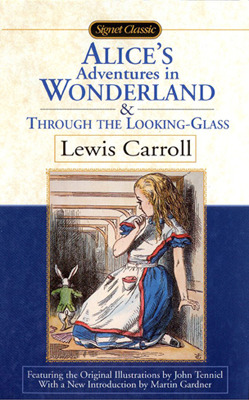
Alice's Adventures in Wonderland & Through the Looking-Glass
#14
Alice in Wonderland
Lewis Carroll
This children’s classic that I ought to have read years ago was fun, quirky, and strangely insightful.

Heidi (Heidi, #1)
#13
Heidi
Johanna Spyri
Ditto on this children’s classic, only it was a bit more life-altering than Alice. The Christian lesson was heart-warming, and it made me long for beauty—in nature, in simple living, and in helping others.

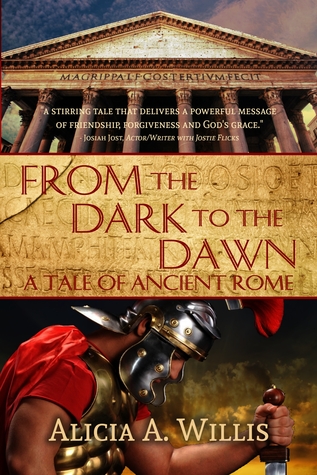
From the Dark to the Dawn: A Tale of Ancient Rome
#12
From the Dark to the Dawn
Alicia A. Willis
This impacting book took me back to ancient Rome and the persecution of the early Christians. It strengthened my resolve to live for God and to be a witness of Him.
Paradise Lost
#11
Paradise Lost
John Milton
This epic poem reaches across the centuries. I especially loved the latter half of the book; besides understanding it more than the first half, I thought the Biblical themes put into lyrical verse was lovely and profound.

Caught Up in a Story: Fostering a Storyformed Life of Great Books & Imagination with Your Children
#10
Caught Up in a Story
Sarah Clarkson
I thoroughly enjoyed this nonfiction book about reading, particularly choosing good books for kids to read. I closely identified with the author’s reading journey, and came away with a strengthened understanding and conviction of how essential reading good books is. It’s called being “story-formed.”

Grace Triumphant: A Tale of the Slave Trade
#9
Grace Triumphant
Alicia A. Willis
Like Alicia Willis’s other books, this novel, about the 1700s British slave trade, was exciting, convicting, and encouraging. I was always on pins and needles over what would happen next. The characters felt so real. And the spiritual lessons—they were serious and rich.

Julie
#8
Julie
Catherine Marshall
This well-written and -researched novel about a rural Pennsylvania factory town in the Great Depression was very powerful and hard to put down. What made it absolutely fantastic was how hard-hitting spiritual themes were woven into the very fabric of the story.

Day of Atonement: A Novel of the Maccabean Revolt
#7
Day of Atonement
David deSilva
This novel about the Maccabean Revolt filled a hole in historical fiction that I always wanted filled. It was well-researched and detailed, and gave me a better understanding of how Israel could have slid into assimilation with the Greeks in inter-testament times. The ending was powerful and made me more determined than ever to stand for God’s ways.

The Map Across Time (The Gates of Heaven, #2)
#6
The Map Across Time
C. S. Lakin
This lengthy fantasy adventure was one long joy to read. I thoroughly enjoyed the writing style, world-building, and characters of C. S. Lakin, especially the myriad of ways she alluded to Scripture and ancient Hebrew. Although it’s the second in a series, it felt strong enough to stand on its own. So much adventure, so many twists, so much mystery, so many beautiful descriptions and lessons….

A Secret Gift: How One Man's Kindness & a Trove of Letters Revealed the Hidden History of the Great Depression
#5
The Secret Gift
Ted Gup
This nonfiction memoir-type book was extremely helpful for my Great Depression research, being about Canton, Ohio (the setting of my WIP), in the 1930s. Not only was it helpful, it was extremely touching as the author explored a fascinating true story and traced the many lives connected to it.

Least of All Saints
#4
Least of All Saints
Grace Irwin
The top four are difficult to order, but I’ll do my best. This was an incredibly well-written Christian novel from the 1950s. The author starts out with a distinctive premise—that of an intellectual unbeliever who becomes a Methodist minister because he believes the tenets of Christian living are compelling, even if he doesn’t believe in God. What follows is a thought-provoking, character-driven story that left me strengthened in my faith.

Les Misérables
#3
Les Miserables
Victor Hugo
Finally reading this beloved classic, I was able to see what all the hype was about. It was truly a solid, satisfying, memorable read. Although I did read an abridged version (the vast majority of versions are abridged), it was plenty long enough. The scope of this story was incredible. Jean Valjean is a wonderful character!

The Dean's Watch
#2
The Dean’s Watch
Elizabeth Goudge
With breathtakingly beautiful prose, Goudge weaves a heart-warming, thought-provoking story about the enigmatic Dean of a city in the northeast England fen country. The spiritual lessons sent chills down me, and the author’s writing style is the most beautiful I’ve ever read!

The Scent of Water
#1
The Scent of Water
Elizabeth Goudge
Although I may have liked the story of The Dean’s Watch a tad better, The Scent of Water had several scenes of beauty in it that touched me to the core. Plus, it was my first Goudge novel; thus, it was the most impacting. Set in England, the story took place contemporaneously to when it was written (1950s, early 1960s) and involved a retired teacher searching for something more to life.


What were some of your top reads of 2015? Which of the books on my list have you read, and what did you think of them?

Wednesday, December 23, 2015

Unique

“I give thanks to you, for I am fearfully and wonderfully made.” Psalm 139:14a
“Before I formed you in the belly I knew you, and before you came out of the womb I did set you apart—I appointed you a prophet to nations.” Jeremiah 1:5

"NSRW Forms of water" by Unknown
God takes delight in fashioning each and every human being. Because of that, each and every human being is unique; unlike the evil governments of the Star Wars universe, God does not create clones. He made every person distinct from one another so there would be an infinite variety in His world, resulting in the greatest possible number of experiences and developments. Because we’re all so different, we’ve brought some pretty crazy stuff into this world, but we’ve also done and discovered an amazing amount that enhances and beautifies life. Which is what God intended. He does not want duplicates; duplicates fit only one purpose.

Which is why it’s absurd to covet what other people have, what they do, who they are. To feel that you’re less of a person than someone else because you can’t do exactly what they do. To believe that you’re unnecessary because you can’t think of anything extraordinary you’ve done. The very fact that you are a unique individual means that you are absolutely necessary to this world. You are not redundant. If you were supposed to be just like someone or everyone else, God would not have made you, since He delights in making His creations diverse.

Being creative yourself helps you understand that aspect of our Creator’s nature. You know the urge to make something new that wasn’t in existence before; it fulfills you unlike anything else. For example, though my main creative outlet is writing, I also enjoy making cards for family and friends. I don’t enjoy writing duplicate stories or making duplicate cards—it’s boring. I take delight in discovering countless ways of crafting words and cards, tailored for a purpose: a particular message or story I need to tell, a particular card for a particular person.

So it is with the individuality with which God created us. He delighted in making you unique, for a special purpose; don’t ruin that by being discontent with your fundamental makeup. Seek the path God has laid for you. 

"Schneeflocken 1885" by Unknown

Note: This isn’t to say we should always consider ourselves individualistically or ignore the good examples of others; we’re made to work for God’s glory in community, too. I’m just concerned about when a person thinks he or she is worthless or superfluous or is tempted to envy others.


Wednesday, December 16, 2015

Happy Birthday, Jane Austen

It's Jane Austen's birthday today! I am so thankful for this talented woman, one of my very favorite authors. She was born 240 years ago, in 1775.

File:Jane Austen coloured version.jpg
wikimedia commons

She wrote six of my favorite books:
  1. Sense and Sensibility, 1811
  2. Pride and Prejudice, 1813
  3. Mansfield Park, 1814
  4. Emma, 1816
  5. Northanger Abbey, 1817
  6. Persuasion, 1817
If you're interested in more of my thoughts about this world-renowned English author, here are three posts: one, two, and three.